Charles Ede - Antiquities Gallery
Skip to main content
  • Menu
  • Home
  • Artworks
  • Events
  • Catalogues
  • Video
  • Press
  • Services
  • Contact
  • Catalogue 205

Catalogue 205

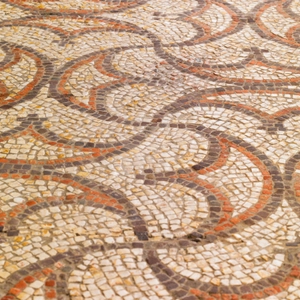
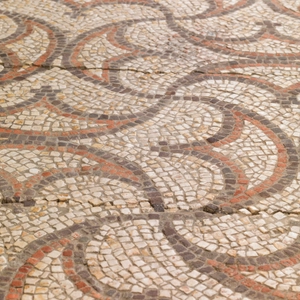
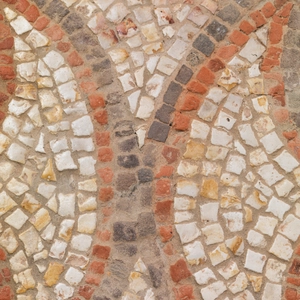
Open a larger version of the following image in a popup: Two sections of Roman mosaic with geometric pelta pattern, England, Hampshire, c.360 AD
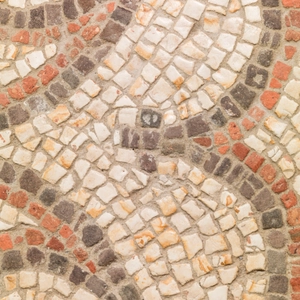
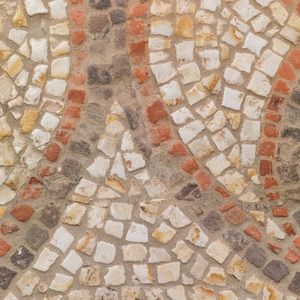
Two sections of Roman mosaic with geometric pelta pattern, England, Hampshire, c.360 AD
Stone and terracotta tesserae
Height: 125cm, length: 442cm
11668 EL
€ 275,000
Enquire
%3Cdiv%20class%3D%22title_and_year%22%3E%3Cem%3ETwo%20sections%20of%20Roman%20mosaic%20with%20geometric%20pelta%20pattern%3C/em%3E%2C%20%3Cspan%20class%3D%22title_and_year_year%22%3EEngland%2C%20Hampshire%2C%20c.360%20AD%3C/span%3E%3C/div%3E%3Cdiv%20class%3D%22medium%22%3EStone%20and%20terracotta%20tesserae%3C/div%3E%3Cdiv%20class%3D%22dimensions%22%3EHeight%3A%20125cm%2C%20length%3A%20442cm%20%3C/div%3E%3Cdiv%20class%3D%22price%22%3E%E2%82%AC%20275%2C000%3C/div%3E

Further images

  • (View a larger image of thumbnail 1) Two sections of Roman mosaic with geometric pelta pattern, England, Hampshire, c.360 AD
  • (View a larger image of thumbnail 2) Two sections of Roman mosaic with geometric pelta pattern, England, Hampshire, c.360 AD
  • (View a larger image of thumbnail 3) Two sections of Roman mosaic with geometric pelta pattern, England, Hampshire, c.360 AD
  • (View a larger image of thumbnail 4) Two sections of Roman mosaic with geometric pelta pattern, England, Hampshire, c.360 AD
  • (View a larger image of thumbnail 5) Two sections of Roman mosaic with geometric pelta pattern, England, Hampshire, c.360 AD
  • (View a larger image of thumbnail 6) Two sections of Roman mosaic with geometric pelta pattern, England, Hampshire, c.360 AD
  • (View a larger image of thumbnail 7) Two sections of Roman mosaic with geometric pelta pattern, England, Hampshire, c.360 AD
  • (View a larger image of thumbnail 8) Two sections of Roman mosaic with geometric pelta pattern, England, Hampshire, c.360 AD
  • (View a larger image of thumbnail 9) Two sections of Roman mosaic with geometric pelta pattern, England, Hampshire, c.360 AD
  • (View a larger image of thumbnail 10) Two sections of Roman mosaic with geometric pelta pattern, England, Hampshire, c.360 AD
  • (View a larger image of thumbnail 11) Two sections of Roman mosaic with geometric pelta pattern, England, Hampshire, c.360 AD
  • (View a larger image of thumbnail 12) Two sections of Roman mosaic with geometric pelta pattern, England, Hampshire, c.360 AD
  • (View a larger image of thumbnail 13) Two sections of Roman mosaic with geometric pelta pattern, England, Hampshire, c.360 AD
  • (View a larger image of thumbnail 14) Two sections of Roman mosaic with geometric pelta pattern, England, Hampshire, c.360 AD
  • (View a larger image of thumbnail 15) Two sections of Roman mosaic with geometric pelta pattern, England, Hampshire, c.360 AD
  • (View a larger image of thumbnail 16) Two sections of Roman mosaic with geometric pelta pattern, England, Hampshire, c.360 AD
  • (View a larger image of thumbnail 17) Two sections of Roman mosaic with geometric pelta pattern, England, Hampshire, c.360 AD
Two sections of mosaic from the corridor of a Roman villa composed of tesserae from red brick and local black and white stone, forming a pelta pattern with cross points....
Read more

Two sections of mosaic from the corridor of a Roman villa composed of tesserae from red brick and local black and white stone, forming a pelta pattern with cross points. The simple rectangular panels have a white matrix and are covered in the geometric design, a black border to the top and bottom; one section is slightly wider than the other, suggesting they were from two separate areas of the corridor from which they came.


When Britain was part of the Roman Empire, from mid 1st- early 5th century AD, lavish villas and vast farming estates were dotted all over the land, particularly in southern England. The Roman villa at Fullerton was built on a river that made it an ideal site for a mill.


There is evidence of a very successful business here, and some time around the year 360 AD the owners built a luxurious villa facing the river. They decorated the walls with brightly coloured frescoes and the floors with colourful mosaics. Most of these had geometric patterns, with the main room being dominated by the Mars mosaic that now resides in Andover museum.


At the time the mosaic was being created, Rome’s influence in Britain was nearing its end. In just twenty years, c.380 AD, the mill appears to have stopped working and within a few decades the site was abandoned.


The Roman Villa had an Iron Age predecessor, in the form of an enclosure. Small ‘Celtic Fields’ have been found all over the area. The original location of the site has been excavated three times since its initial discovery. First when the floor was lifted in 1872, then again in the 1960s and finally in 2000 and 2001 by Barry Cunliffe as part of the Danebury Envrions Roman Program.

Close full details

Provenance

Sir William Cory (14th August 1857-17th May 1933); discovered in a field on his estate, Fullerton, Hampshire, UK, in 1872 and installed in Fullerton Manor when it was built in 1906
Private collection Fullerton, UK; removed from the Manor in 2023

Literature

A large mosaic showing Mars, from the same villa, is now in Andover Museum, UK. An information board there shows the original layout of the mosaics within the villa.
For another example of this pelta design from Scampton villa, Lincolnshire, UK  and Hinton St Mary mosaic, Dorset UK, see Anthony Beeson, Mosaics in Roman Britain (Stroud, 2022), p.54 and p.69

Publications

A watercolour by Dr David S Neal made in 1964 is now in the British Museum, London, UK, Registration number 1992,0602.31, and was published in D.S. Neal and S.R. Cosh, Roman Mosaics of Britain, Vol.III, South-East Britain (London, 2009), fig.125, p.177
Anne Rainey, Mosaics in Roman Britain (Bath, 1973), pp.79-80, SU 3740 f

Share
  • Facebook
  • X
  • Pinterest
  • Tumblr
  • Email
Previous
|
Next
24 
of 30

Click here to join our mailing list


Terms & Conditions of Sale

Privacy Policy


Go
Send an email
View on Google Maps
Facebook, opens in a new tab.
Instagram, opens in a new tab.
Youtube, opens in a new tab.
Join the mailing list
Copyright © 2026 Charles Ede Limited
Manage cookies
Site by Artlogic

This website uses cookies
This site uses cookies to help make it more useful to you. Please contact us to find out more about our Cookie Policy.

Manage cookies
Reject non essential
Accept

Cookie preferences

Check the boxes for the cookie categories you allow our site to use

Cookie options
Required for the website to function and cannot be disabled.
Improve your experience on the website by storing choices you make about how it should function.
Allow us to collect anonymous usage data in order to improve the experience on our website.
Allow us to identify our visitors so that we can offer personalised, targeted marketing.
Save preferences
Close

Join our mailing list

Please fill in your details below if you would like to be added to our mailing list.

Signup

* denotes required fields

We will process the personal data you have supplied in accordance with our privacy policy (available on request). You can unsubscribe or change your preferences at any time by clicking the link in our emails.