David Alfaro Siquerios, Portrait of Blanca Luz, 1931, oil on gessoed burlap, Private Collection, sold Christie’s, May 1992, £46,500
 David Alfaro Siquerios and Blanca Luz Brum
 David Alfaro Siquerios and Blanca Luz Brum
 Blanca Luz Brum
 Blanca Luz Brum
 David Alfaro Siquerios, Reclining Nude (Blanca Luz Brum), 1931, Lithographic print, Philadelphia Museum of Art, in. 1976-97-121
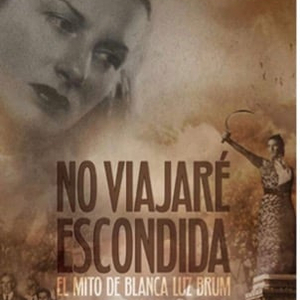
 Promotional image for the film “I will not travel hidden” by Pablo Zubizarreta
 Francisco Migeuel, Dolores Olmedo Patiño, 1931, oil on canvas, Museo Dolores Olmedo, Mexico.
 Francisco Miguel, Surreal landscape, date and location untraced
 Francisco Miguel, Self Portrait, date and location untraced
Further images
-
(View a larger image of thumbnail 1)
-
(View a larger image of thumbnail 2)

-
(View a larger image of thumbnail 3)

-
(View a larger image of thumbnail 4)

-
(View a larger image of thumbnail 5)

-
(View a larger image of thumbnail 6)

-
(View a larger image of thumbnail 7)

-
(View a larger image of thumbnail 8)

-
(View a larger image of thumbnail 9)
-
(View a larger image of thumbnail 10)

-
(View a larger image of thumbnail 11)

-
(View a larger image of thumbnail 12)

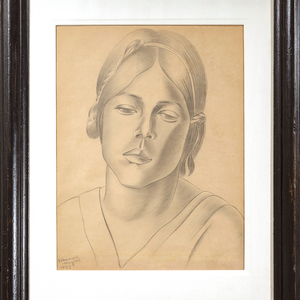
This beautifully sensitive yet accentuated and strikingly modern portrait, dating to 1932, is of the Uruguayan poet, artist, writer, feminist, and political figure, Blanca Brum (1906-1985); depicted with her large almond eyes, prim eyebrows, and trademark hairstyle. Despite her beauty and fame, as well as her notoriously tumultuous relationship with her husband the Mexican muralist , David Alfaro Siquerios (1896-1974), it is one of only two known portraits of her likeness (the other being by Siqueiros himself, fig. 6). The artist, Francisco Miguel, was one of Galicia’s most promising artists, and spent a year living with the couple in Mexico in 1932, at the vanguard of the Mexican muralist movement, when this work was executed. However, Miguel would die tragically only four years later, aged only 39, murdered in his native Spain as an anti-fascist in the 1936 Franco uprising. Today his works are extremely rare.
Francisco Miguel Férnandez Diaz was born in La Coruna in Galicia, Spain and was largely self-taught as an artist. In the 1920s having married Syra Alonso, the couple travelled to Paris, where he met and befriended his native countryman Pablo Picasso as well as Mexicans Diego Rivera and David Alfaro Siquerios. Despite no documentary records surviving of his time spent living in Montparnasse during the 1920’s, Miguel was undoubtedly influenced by his friends Picasso and Rivera, as well as their immediate circle. The distinctive and eloquent cubist approach to his portrait of Brum, so gracefully realised, also shows the influence of others amongst their group, namely Amadeo Modigliani, Georges Braque and Chäim Soutine.
Having spent time in Paris and Cuba, in 1931 Francisco Miguel travelled to Mexico, where in 1932 he lived in Taxco with Blanca Luz Brum and David Alfaro Siquerios. Siquerios had been exiled there after being imprisoned in Mexico City for his political views (where Brum had supplied him with artists materials whilst incarcerated, so that he could continue working on his commissions). Miguel seems to have assisted Rivera on his murals during this stay, and he was also in direct contact with other members of the Mexian avant garde art movement at this pivotal moment, including Siquerios’s friend Diego Rivera, who had also recently married fellow artist Frida Khalo.
Blanca Luz Brum’s relationship with Siqueiros was intense and fractious and the couple separated in 1933. Her beauty was well known and Pablo Neruda, the famous Chilean poet, had an affair with her at around this time. Brum undoubtedly had intellectual appeal in addition to her looks. She wrote poetry, painted and was involved in politics. Today, she is revered in South America as a leading female figure of the early 20th century regarded for her progressive views and a symbol of female emancipation. Her poem Himno in particular is now viewed as an early work of ecofeminism. At time of this portrait, she was at the height of her fame given her poetry and romantic relationships.
Brum would notably go on to work in Argentina in the 1940s for the unions that gave rise to Peronism in Argentina, and subsequently served as press officer for the Ministry of Labour and Social Security under Juan Domingo Perón. Despite being exiled to the Juan Fernandez Island during the Uruguayan dictatorship (1973–1985), she lived a long life, returning to poetry during this period, in which she addressed her experience of living in exile on the remote island. After her death in 1985, her dynamic life at the forefront of the intellectual political and artistic movements in South America became the subject of a movie by Pablo Zubizarreta entitled “No Viajaré Escondida” (2018).
Francisco Miguel returned to Spain in 1933, where, after some time spent in Madrid, he settled in his native Galicia, in the Casa da Felicidade with his wife in the port of Santa Cruz, Oleiros. However, on August 3rd, 1936 he was arrested by the Civil Guard loyal to Franco, accused of acting against the military coup regime and for being an anti-fascist. He was released, but on September 19th of that same year he was arrested again, and on September 28th he was brutally tortured and murdered, his corpse being found riddled with bullets in Bértoa, with his face cleft, and his hands amputated – an attempt to humiliate his liberal talent as an artist. In 1942 his wife Syra and three children returned to Mexico permanently fleeing the horrors of their native country.
Largely forgotten today, in 1999 the city of La Coruña dedicated a street to Miguel, in honour of his bravery. Miguel, who’s paintings testify his skill as one of Spain and Galicia’s leading cubist and surrealist artists of the early 20th century are extremely rare. In recent years an exhibition of his work was held in Spain, through the Museo Casa Estudio Diego Rivera y Frida Kahlo in Mexico City and the Círculo de Bellas Artes in Madrid, entitled ‘Entre Vanguardias: Francisco Miguel. Pintor Gallego y Mexicano (1897-1936)’ with an accompanying catalogue of the same title. His portrait, of the influential female Mexican businesswoman, philanthropist, and art collector Dolores Olmedo (1908-2002) dated to 1931 the year before the present portrait, is held in Mexico City, in the Museo Dolores Olmedo.
IMAGES:
Fig.1. David Alfaro Siquerios, Portrait of Blanca Luz, 1931, oil on gessoed burlap, Private Collection, sold Christie’s, May 1992, £46,500
Fig.2. and 3. David Alfaro Siquerios and Blanca Luz Brum
Fig.4. and 5. Photographs of Blanca Lux Brum
Fig.6. David Alfaro Siquerios, Reclining Nude (Blanca Luz Brum), 1931, Lithographic print, Philadelphia Museum of Art, in. 1976-97-121
Fig.7. Promotional image for the film “I will not travel hidden” by Pablo Zubizarreta
Fig.8. Francisco Migeuel, Dolores Olmedo Patiño, 1931, oil on canvas, Museo Dolores Olmedo, Mexico.
Fig.9. Francisco Miguel, Surreal landscape, date and location untracedFig.10.Francisco Miguel, Self Portrait, date and location untraced
***
Este retrato, bellamente sensible pero a la vez acentuado y sorprendentemente moderno, fechado en 1932, es de la poeta, artista, escritora, feminista y figura política uruguaya Blanca Luz Brum (1906-1985); representada con sus grandes ojos almendrados, cejas cuidadas y su característico peinado. A pesar de su belleza y fama, así como de su notoriamente tumultuosa relación con su esposo, el muralista mexicano David Alfaro Siqueiros (1896-1974), este es uno de los dos únicos retratos conocidos de ella (el otro fue realizado por el propio Siqueiros, fig. 6). El artista, Francisco Miguel, fue uno de los más prometedores de Galicia, y pasó un año viviendo con la pareja en México en 1932, en la vanguardia del movimiento muralista mexicano, cuando ejecutó esta obra. Sin embargo, Miguel moriría trágicamente solo cuatro años después, con apenas 39 años, asesinado en su España natal como antifascista durante el levantamiento de Franco en 1936. Hoy en día sus obras son extremadamente raras.
Francisco Miguel Fernández Díaz nació en La Coruña, en Galicia, España, y fue en gran parte autodidacta como artista. En la década de 1920, tras casarse con Syra Alonso, la pareja viajó a París, donde conoció y entabló amistad con su compatriota Pablo Picasso, así como con los mexicanos Diego Rivera y David Alfaro Siqueiros. Aunque no se conservan registros documentales de su tiempo viviendo en Montparnasse durante la década de 1920, Miguel fue indudablemente influenciado por sus amigos Picasso y Rivera, así como por su círculo inmediato. El enfoque cubista distintivo y elocuente de su retrato de Brum, realizado con tanta gracia, también muestra la influencia de otros entre su grupo, como Amadeo Modigliani, Georges Braque y Chäim Soutine.
Después de pasar tiempo en París y Cuba, en 1931 Francisco Miguel viajó a México, donde en 1932 vivió en Taxco con Blanca Luz Brum y David Alfaro Siqueiros. Siqueiros había sido exiliado allí después de ser encarcelado en la Ciudad de México por sus opiniones políticas (donde Brum le había suministrado materiales artísticos mientras estaba encarcelado, para que pudiera continuar trabajando en sus encargos). Parece que Miguel asistió a Rivera en sus murales durante esta estancia, y también estuvo en contacto directo con otros miembros del movimiento artístico de vanguardia mexicano en este momento crucial, incluido el amigo de Siqueiros, Diego Rivera, quien también se había casado recientemente con la artista Frida Kahlo.
La relación de Blanca Luz Brum con Siqueiros fue intensa y conflictiva, y la pareja se separó en 1933. Su belleza era bien conocida, y el famoso poeta chileno Pablo Neruda tuvo un romance con ella alrededor de este tiempo. Brum indudablemente tenía un atractivo intelectual además de su apariencia. Escribía poesía, pintaba y estaba involucrada en la política. Hoy en día, es venerada en América del Sur como una de las principales figuras femeninas del siglo XX, reconocida por sus ideas progresistas y como símbolo de la emancipación femenina. Su poema Himno, en particular, es ahora visto como una obra temprana del ecofeminismo. En el momento de este retrato, estaba en la cúspide de su fama, debido a su poesía y sus relaciones románticas.
Brum trabajaría notablemente en Argentina en la década de 1940 para los sindicatos que dieron origen al peronismo en ese país, y posteriormente se desempeñó como oficial de prensa para el Ministerio de Trabajo y Seguridad Social bajo Juan Domingo Perón. A pesar de ser exiliada a la Isla Juan Fernández durante la dictadura uruguaya (1973-1985), vivió una vida larga, regresando a la poesía durante este período, en la que abordó su experiencia de vivir en el exilio en la remota isla. Tras su muerte en 1985, su dinámica vida en la vanguardia de los movimientos intelectuales, políticos y artísticos de América del Sur se convirtió en el tema de una película de Pablo Zubizarreta titulada No Viajaré Escondida (2018).
Francisco Miguel regresó a España en 1933, donde, después de pasar algún tiempo en Madrid, se estableció en su Galicia natal, en la Casa da Felicidade con su esposa en el puerto de Santa Cruz, Oleiros. Sin embargo, el 3 de agosto de 1936 fue arrestado por la Guardia Civil leal a Franco, acusado de actuar contra el régimen del golpe militar y por ser antifascista. Fue liberado, pero el 19 de septiembre de ese mismo año fue arrestado nuevamente, y el 28 de septiembre fue brutalmente torturado y asesinado; su cadáver fue encontrado acribillado a balazos en Bértoa, con el rostro desfigurado y las manos amputadas, en un intento de humillar su talento liberal como artista. En 1942 su esposa Syra y sus tres hijos regresaron a México permanentemente, huyendo de los horrores de su país natal.
Largamente olvidado hoy en día, en 1999 la ciudad de La Coruña dedicó una calle a Miguel en honor a su valentía. Miguel, cuyas pinturas testimonian su habilidad como uno de los principales artistas cubistas y surrealistas de España y Galicia en el siglo XX, es extremadamente raro. En los últimos años se realizó una exposición de su obra en España, a través del Museo Casa Estudio Diego Rivera y Frida Kahlo en la Ciudad de México y el Círculo de Bellas Artes en Madrid, titulada Entre Vanguardias: Francisco Miguel. Pintor Gallego y Mexicano (1897-1936), con un catálogo acompañante del mismo título. Su retrato de la influyente empresaria, filántropa y coleccionista de arte mexicana Dolores Olmedo (1908-2002), fechado en 1931, el año anterior al presente retrato, se encuentra en la Ciudad de México, en el Museo Dolores Olmedo.
Provenance
The Vasco family, Northern Spain, and by descent,Private Collection, Madrid, until 2023